
Are you using well water?
by admin on Jun.22, 2010, under Real Estate
Many rural homeowners, including myself, get 100% of their household water from a well on their property. Water is like electricity… as long as you have it, you don’t pay much attention to it otherwise. This is not always a good thing when it comes to wells and well water.
If your well is not near any known source of contamination, there is little cause for immediate concern. But if you notice any change in your well’s water quality or if there are any signs of illness, an immediate check with local authorities is suggested. For example, talk with a geologist at a local college or someone from a nearby public water system or your local health department. They’ll know about conditions in your area.
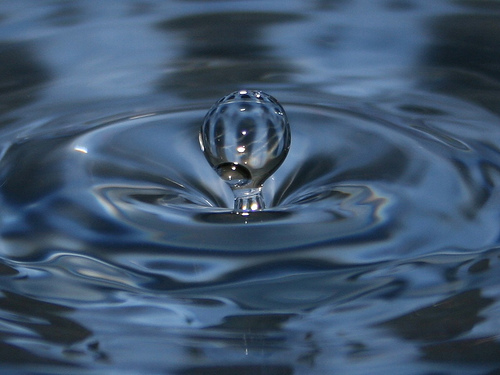
Clean drinking water
Great Photo: Snap
Have your well water tested…
Test your water every year for total coliform bacteria, nitrates, total dissolved solids, and pH levels. If you suspect other contaminants, test for these also. Often county health departments do tests for bacteria and nitrates. For other substances, health departments, environmental offices, or county governments should have a list of state certified laboratories.
Follow the instructions given for taking and sending or storing your water sample – they are there for a reason. Inaccurate readings due to poor sampling don’t help you one bit. Remember to test your water after replacing or repairing any part of the well system (piping, pump, or the well itself.) Also test if you notice a change in your water’s look, taste, or smell.
Contaminants
As far as contamination goes there are unfortunately many possible reasons your water may become less than healthy. Testing can get expensive very quickly so paying attention to your local surroundings and any resulting water “symptoms” can save you time and money.
– Corrosion of pipes and plumbing can require a test for corrosion, pH, and lead.
– Nearby areas of intensive agriculture? Test for nitrate, pesticides, and coliform bacteria
– Coal or other mining operations nearby? Start tests on metals, pH, and corrosion
– Scaly residues, soaps don’t lather? Test for water hardness
– Water appears cloudy or frothy? Suspect detergent infiltration
Risks
The amount of risk from a drinking water contaminant depends on the specific substance and the amount in the water. The health of the person also matters. Some contaminants cause immediate and severe effects. It may take only one bacterium or virus to make a weak person sick. Another person may not be affected. For very young children, taking in high levels of nitrate over a relatively short period of time can be very dangerous.
But where does your well water come from?
Even if you own your own well on your own property, it is still good to find out what local aquifers and groundwater may impact your well. This was the #1 concern of local residents in my area when a mining company wanted to buy (and ruin) 1,000 acres of land within 3 miles of my house.
The Natural Resources Conservation Service (NRCS) replaced the old U.S. Soil Conservation Service. It is part of the U.S. Department of Agriculture. The NRCS and the U.S. Geological Survey have information about local soils and ground water. They can tell you where a local water supply is located and how it is recharged or replenished. They would know of any pollution threats and if radon is a problem in the area.
To find out more about your watershed and its ground water visit “Surf Your Watershed.” Also look at the “Index of Watershed Indicators.” These websites can also tell you possible sources of problems.
Be safe…

3 Trackbacks / Pingbacks for this entry
May 19th, 2011 on 06:31
[…] through a reverse osmosis filter – just to be on the safe side. Well water does have its own requirements for filtering which I wrote about awhile back. So what’s my […]
August 12th, 2011 on 06:44
[…] 99% of the local area is on well water. Wells, particularly more shallow wells, are also a concern during a drought. Some thoughts on well water were mentioned in this prior post. […]
October 31st, 2011 on 06:12
[…] about well water… :clean water, companies taking over the water supply, environment, lack of clean […]